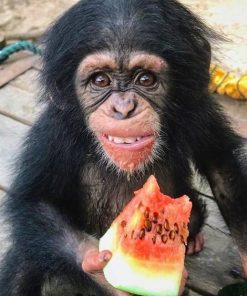
Baby Chimpanzees: A Complete Species Guide
Chimpanzees (Pan troglodytes) are great apes—not monkeys—native to the equatorial forests, woodlands, and savannas of Central and West Africa. They are among the most intelligent and behaviorally complex animals on Earth, sharing an estimated 98 percent of their DNA with humans. This page covers the biology, needs, and regulatory realities of chimpanzees to help visitors understand the species before browsing available listings.
Quick Facts
• Common name: Chimpanzee
• Scientific name: Pan troglodytes
• Family: Hominidae (great apes)
• Native range: Central and West Africa
• Habitat: Tropical rainforest, woodland, and savanna-woodland mosaics
• Adult weight: Roughly 90–130 lbs, with males typically larger than females
• Lifespan: 40–60 years
• Diet: Omnivorous; fruit, leaves, seeds, insects, and occasional meat
• Conservation status: Endangered (IUCN)
About Chimpanzees
Chimpanzees are classified as great apes, placing them in the same broad group as gorillas, orangutans, bonobos, and humans, rather than with true monkeys. They are tailless, highly dexterous, and capable of sophisticated problem-solving, tool use, and social learning. Infant chimpanzees are born highly dependent on their mothers and develop gradually over several years.
Physical Characteristics
Adult chimpanzees typically reach 90 to 130 pounds with muscular builds and exceptional strength relative to body size. They have long arms, opposable thumbs and big toes, dark coarse hair, and expressive faces capable of a wide range of expressions. Infants are born with lighter facial skin that darkens with age.
Habitat and Natural Range
Wild chimpanzees inhabit a band of Central and West Africa spanning tropical rainforest, gallery forest, and drier woodland-savanna mosaics. Habitat availability and quality are directly tied to the species’ long-term survival, and ongoing deforestation is one of the primary pressures on remaining wild populations.
Diet
In the wild, chimpanzees are omnivorous, eating primarily ripe fruit supplemented with leaves, seeds, bark, insects, and occasionally meat obtained through cooperative hunting. A varied, nutritionally complete diet is essential to healthy development at every life stage; see our general monkey and primate diet guide for related nutritional background.
Behavior and Social Structure
Chimpanzees live in large, fluid communities with complex dominance hierarchies, coalitions, and long-term social bonds. They communicate through vocalizations, facial expressions, gestures, and touch, and they are well documented in scientific literature for tool use and cultural transmission of learned behaviors between generations.
Care and Welfare Considerations
Chimpanzees are long-lived, highly social, and cognitively demanding animals that require significant space, enrichment, social companionship, and specialized veterinary knowledge throughout a multi-decade lifespan. Prospective caregivers should research housing, socialization, and enrichment requirements thoroughly; our baby primate care guide outlines general early-care principles relevant to infant great apes and monkeys alike.
Legal and Regulatory Considerations
Laws governing the private ownership, sale, transport, and importation of chimpanzees vary significantly by country, state, county, and municipality, and many jurisdictions restrict or prohibit private possession of great apes entirely. International movement may also be subject to CITES requirements. We do not claim that ownership is legal in any specific location. Always verify current requirements with your local wildlife authority before making arrangements; see our overview of primate ownership laws for general guidance.
Conservation
The chimpanzee is listed as Endangered by the IUCN. Primary threats include habitat loss and fragmentation, poaching, disease transmission from humans, and illegal wildlife trade. Numerous accredited sanctuaries and conservation organizations across Africa work on habitat protection, anti-poaching efforts, and rehabilitation of confiscated or orphaned individuals.
Frequently Asked Questions
Is a chimpanzee a monkey?
No. Chimpanzees are great apes, not monkeys. Apes are generally tailless and have different skeletal and cognitive traits than true monkeys.
How big does a chimpanzee get?
Adult chimpanzees typically weigh between 90 and 130 pounds, with males generally larger and more muscular than females.
How long do chimpanzees live?
Chimpanzees can live 40 to 60 years, representing a multi-decade commitment for any caregiver.
What do chimpanzees eat?
Wild chimpanzees eat mostly fruit along with leaves, seeds, insects, and occasionally meat; captive diets must be carefully balanced to meet nutritional needs.
Are chimpanzees endangered?
Yes, chimpanzees are listed as Endangered by the IUCN due to habitat loss, poaching, and disease.
Is it legal to own a chimpanzee?
Legality varies widely by jurisdiction and many areas restrict or prohibit private ownership of great apes. Always confirm current local, state, and national regulations before proceeding.
How social are chimpanzees?
Extremely social. Chimpanzees live in complex communities with hierarchies, alliances, and long-term relationships, and they require companionship and mental stimulation.
What is the difference between a chimpanzee and a monkey?
Apes, including chimpanzees, lack tails and have larger brains relative to body size compared with most monkeys; see our Monkeys vs. Apes guide for a full comparison.
Related Categories
• Capuchin Monkeys
• Macaque Monkeys
• Vervet Monkeys
Related Educational Articles
• Monkeys vs. Apes: How to Tell the Difference
• How to Care for a Baby Monkey
• Is It Legal to Own a Monkey?
Sources and Further Reading
General reference on great ape biology and conservation status can be found through the World Wildlife Fund species profile and national wildlife authorities such as the USDA APHIS Animal Care program. Regulations vary by country and region; consult your local wildlife authority for current requirements.