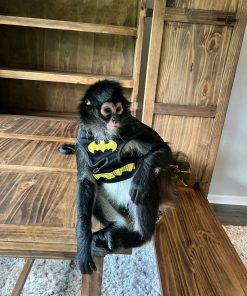
Spider Monkeys: A Complete Species Guide
Spider monkeys (genus Ateles) are large, long-limbed New World monkeys native to Central and South American rainforests, named for their spindly limbs and highly prehensile tail. This guide covers spider monkey biology, needs, and legal considerations.
Quick Facts
• Common name: Spider monkey
• Scientific name: Genus Ateles
• Family: Atelidae
• Native range: Central America through South America
• Habitat: Tropical rainforest, especially undisturbed high-canopy forest
• Adult weight: Roughly 13–24 lbs
• Lifespan: 20–27 years in the wild, longer in managed care
• Diet: Primarily frugivorous; fruit, leaves, seeds, flowers
• Conservation status: Endangered, several species Critically Endangered (IUCN)
About Spider Monkeys
Spider monkeys are among the largest New World monkeys, built for a highly arboreal lifestyle with a fully prehensile tail that functions almost as a fifth limb. They lack thumbs on their hands, an adaptation that supports efficient brachiation through the forest canopy.
Physical Characteristics
Spider monkeys have long, slender limbs, a long prehensile tail with a bare gripping pad at the tip, and reduced or absent thumbs. Fur color ranges from black to brown to reddish depending on species.
Habitat and Natural Range
Spider monkeys inhabit tropical rainforest from southern Mexico through the Amazon basin, generally favoring tall, undisturbed forest with continuous canopy that supports their highly arboreal movement style.
Diet
Spider monkeys are primarily frugivorous, with ripe fruit making up the majority of their diet, supplemented by young leaves, flowers, and seeds. Their reliance on fruit makes them important seed dispersers within their forest ecosystems. See our general primate diet guide for related background.
Behavior and Social Structure
Spider monkeys live in fission-fusion societies, where a larger community splits into smaller, flexible subgroups that change size and composition throughout the day. They are highly agile, using brachiation and their prehensile tail to move rapidly through the canopy.
Care and Welfare Considerations
Spider monkeys are large, highly active, and require extensive vertical space, varied fruit-based nutrition, and social companionship to thrive. Their specialized locomotion and social needs mean prospective caregivers should research housing and enrichment requirements thoroughly.
Legal and Regulatory Considerations
Spider monkey ownership, sale, and transport regulations vary by country, state, county, and municipality, and their threatened conservation status may trigger additional permit requirements in some jurisdictions. We do not claim ownership is legal everywhere. Review our primate ownership law overview and confirm current requirements with your local wildlife authority.
Conservation
Spider monkeys are among the most threatened New World primates, with the genus classified as Endangered overall and several individual species Critically Endangered due to severe habitat loss and hunting pressure.
Frequently Asked Questions
Why do spider monkeys have such long limbs?
Their long limbs and prehensile tail are adaptations for efficient movement through the forest canopy via brachiation, allowing rapid travel between trees.
Do spider monkeys have thumbs?
Spider monkeys have reduced or absent thumbs, an adaptation believed to aid efficient swinging movement through the canopy.
How big do spider monkeys get?
Adult spider monkeys typically weigh between 13 and 24 pounds.
What do spider monkeys eat?
Spider monkeys are primarily frugivorous, eating mostly ripe fruit along with leaves, flowers, and seeds.
Are spider monkeys endangered?
Yes, spider monkeys are classified as Endangered overall, with several species Critically Endangered due to habitat loss.
Is it legal to own a spider monkey?
Legality varies by jurisdiction and their conservation status may add permit requirements in some areas. Always confirm current regulations locally.
How social are spider monkeys?
Spider monkeys live in fission-fusion societies, splitting into smaller flexible subgroups throughout the day rather than remaining in one fixed group.
How long do spider monkeys live?
Spider monkeys live approximately 20 to 27 years in the wild, with longer lifespans possible in managed care.
Related Categories
• Capuchin Monkeys
• Squirrel Monkeys
• Owl Monkeys
Related Educational Articles
• Spider Monkey Facts: Prehensile Tails, Diet and Why They Are Endangered
• South American Monkeys: The New World Specialists
• Why Monkeys Swing Through Trees: Brachiation, Leaping and Canopy Travel
Sources and Further Reading
For general species background, see the World Wildlife Fund primate resources and the USDA APHIS Animal Care program. Regulations vary by region; consult your local wildlife authority for current requirements.