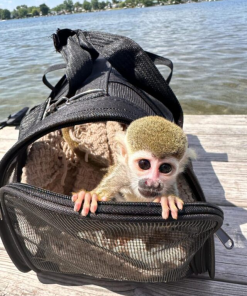
Squirrel Monkeys: A Complete Species Guide
Squirrel monkeys (genus Saimiri) are small, energetic New World monkeys native to Central and South America, easily recognized by their bright coloration and expressive faces. This guide covers squirrel monkey biology, needs, and legal considerations.
Quick Facts
• Common name: Squirrel monkey
• Scientific name: Genus Saimiri
• Family: Cebidae
• Native range: Central America through South America
• Habitat: Tropical rainforest, especially near rivers and forest edge
• Adult weight: Roughly 1.5–2.5 lbs
• Lifespan: 15–20 years
• Diet: Omnivorous; fruit, insects, small vertebrates
• Conservation status: Varies by species, Least Concern to Vulnerable (IUCN)
About Squirrel Monkeys
Squirrel monkeys are small, highly active New World monkeys known for living in some of the largest social groups of any primate, sometimes numbering in the dozens to hundreds in the wild. They are agile climbers and quick, energetic foragers.
Physical Characteristics
Squirrel monkeys have a slender build, short fur usually olive to golden in color, a distinctive black-and-white facial mask, and a long non-prehensile tail used primarily for balance rather than gripping.
Habitat and Natural Range
Squirrel monkeys range across Central America and much of the Amazon basin, favoring forest near rivers and streams as well as secondary growth and forest edge habitat.
Diet
Squirrel monkeys are omnivorous, spending much of the day foraging for insects along with fruit and occasionally small vertebrates. Insects often make up a substantial portion of their diet compared with some other New World monkeys. See our general primate diet guide for related background.
Behavior and Social Structure
Squirrel monkeys live in some of the largest and most complex social groups among primates, with intricate dominance structures and frequent group movement while foraging. They are highly vocal, using a wide range of calls to maintain group cohesion.
Care and Welfare Considerations
Squirrel monkeys are active and highly social, generally requiring companionship, varied enrichment, and ample space to climb and move throughout the day. Prospective caregivers should research their specific social and dietary needs carefully before making any commitment.
Legal and Regulatory Considerations
Squirrel monkey ownership, sale, and transport regulations vary by country, state, county, and municipality. We do not claim ownership is legal everywhere. Review our primate ownership law overview and confirm current requirements with your local wildlife authority.
Conservation
Conservation status varies among squirrel monkey species, from Least Concern to Vulnerable, with habitat loss along rivers and forest edges being a key regional concern.
Frequently Asked Questions
How big do squirrel monkeys get?
Adult squirrel monkeys typically weigh between 1.5 and 2.5 pounds, making them one of the smaller New World monkey species.
How long do squirrel monkeys live?
Squirrel monkeys typically live 15 to 20 years depending on care conditions.
What do squirrel monkeys eat?
Squirrel monkeys eat a diet rich in insects along with fruit and occasionally small vertebrates.
Do squirrel monkeys live in large groups?
Yes, squirrel monkeys form some of the largest social groups of any primate, sometimes numbering in the dozens to hundreds in the wild.
Is it legal to own a squirrel monkey?
Legality varies by jurisdiction. Always confirm current local, state, and national regulations before proceeding.
Are squirrel monkeys endangered?
Conservation status varies by species, from Least Concern to Vulnerable, depending largely on regional habitat pressure.
What is the difference between a squirrel monkey and a capuchin?
Squirrel monkeys are smaller and more insect-focused in diet than capuchins, and they typically form much larger social groups; see our Capuchin Monkeys category for comparison.
Are squirrel monkeys good climbers?
Yes, squirrel monkeys are agile, active climbers well adapted to moving quickly through the forest canopy and understory.
Related Categories
• Capuchin Monkeys
• Marmoset Monkeys
• Tamarin Monkeys
Related Educational Articles
• Squirrel Monkey Guide: Size, Diet, Troops and Where They Live
• South American Monkeys: The New World Specialists
• Monkey Diet by Species: What Each Monkey Really Eats
Sources and Further Reading
For general species background, see the World Wildlife Fund primate resources and the USDA APHIS Animal Care program. Regulations vary by region; consult your local wildlife authority for current requirements.