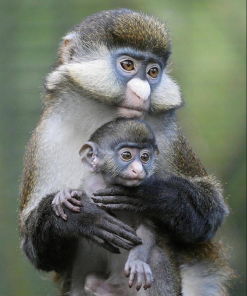
Guenon Monkeys: A Complete Species Guide
Guenons (genus Chlorocebus and the broader guenon group, tribe Cercopithecini) are a diverse group of Old World monkeys native to sub-Saharan Africa, prized for their striking facial markings and coloration. This guide covers guenon biology, needs, and legal considerations.
Quick Facts
• Common name: Guenon monkey
• Scientific classification: Tribe Cercopithecini
• Family: Cercopithecidae (Old World monkeys)
• Native range: Sub-Saharan Africa
• Habitat: Forest, woodland, and forest-savanna mosaic
• Adult weight: Roughly 6–18 lbs depending on species
• Lifespan: 20–30 years
• Diet: Omnivorous; fruit, leaves, insects, occasional small prey
• Conservation status: Varies by species, Least Concern to Vulnerable (IUCN)
About Guenon Monkeys
Guenons are a large and diverse group of African Old World monkeys, distinguished by often vivid facial coloration and fur patterns that vary widely between species. They are agile, arboreal, and adapted to a wide range of African forest and woodland habitats.
Physical Characteristics
Guenons typically have slender bodies, long tails used for balance rather than gripping, and distinctive facial markings that can include brow patches, cheek tufts, or nose spots depending on species. Coloration often serves a role in species and individual recognition.
Habitat and Natural Range
Guenons range across a broad swath of sub-Saharan Africa, occupying rainforest, gallery forest, woodland, and forest-savanna edge habitats. Different species occupy different ecological niches, from dense canopy specialists to more open-country generalists.
Diet
Guenons are omnivorous, primarily eating fruit and leaves supplemented with insects, seeds, and occasionally small prey. Dietary variety is important to replicate in managed care; see our primate diet guide for general nutritional background.
Behavior and Social Structure
Guenons typically live in social groups organized around related females, with vocal alarm calls that can be specific to different predator types. They are alert, quick-moving monkeys that rely heavily on vision and vocal communication.
Care and Welfare Considerations
Guenons are active, socially complex animals requiring ample space, climbing structures, social companionship, and daily enrichment. Prospective caregivers should research species-specific needs thoroughly, as requirements can vary between guenon species.
Legal and Regulatory Considerations
Regulations governing guenon ownership, sale, and transport vary by country, state, county, and municipality. We do not claim ownership is legal everywhere. Review our primate ownership law overview and confirm current requirements with your local wildlife authority.
Conservation
Conservation status varies across guenon species, with some classified as Least Concern and others as Vulnerable due to habitat loss and hunting pressure. Habitat protection across their African range is the primary conservation priority.
Frequently Asked Questions
What is a guenon monkey?
Guenons are a diverse group of African Old World monkeys known for distinctive facial markings and coloration, encompassing many species across sub-Saharan Africa.
How big do guenon monkeys get?
Adult guenons typically weigh between 6 and 18 pounds depending on the specific species.
What do guenon monkeys eat?
Guenons eat an omnivorous diet dominated by fruit and leaves, supplemented with insects and occasional small prey.
Are guenon monkeys related to vervet monkeys?
Yes, vervet monkeys (genus Chlorocebus) are part of the broader guenon group and share many behavioral and physical traits.
Is it legal to own a guenon monkey?
Legality varies by jurisdiction. Always confirm current local, state, and national regulations before proceeding.
How long do guenon monkeys live?
Guenons typically live 20 to 30 years depending on species and care conditions.
Are guenon monkeys endangered?
Conservation status varies by species, ranging from Least Concern to Vulnerable, mainly due to habitat loss.
How social are guenon monkeys?
Guenons are social monkeys that typically live in groups centered on related females, using vocal calls to coordinate group activity and signal danger.
Related Categories
• Vervet Monkeys
• Macaque Monkeys
• Pigtail Monkeys
Related Educational Articles
• African Monkeys: Guenons, Baboons, Colobus and More
• Vervet Monkey Facts: Alarm Calls, Diet and Behavior
• Old World vs. New World Monkeys: The Great Divide
Sources and Further Reading
For general species background, see the World Wildlife Fund primate resources and the USDA APHIS Animal Care program. Regulations vary by region; consult your local wildlife authority for current requirements.