
Monkey Facts & Species, Primates Care And Tips
Old World vs. New World Monkeys: The Great Divide

Aug
Comparing Old World vs New World monkeys reveals two branches of primate evolution shaped by millions of years on separate continents.
Every monkey alive belongs to one of two families that have been evolving separately for something like 35 to 40 million years. Once you know what separates them, identifying an unfamiliar species becomes far easier.
Where They Live
Old World monkeys occupy Africa and Asia, with a toehold in Europe on Gibraltar. New World monkeys occupy Central and South America. There is no natural overlap, and the geography is mapped in where do monkeys live.
Nostrils and Faces
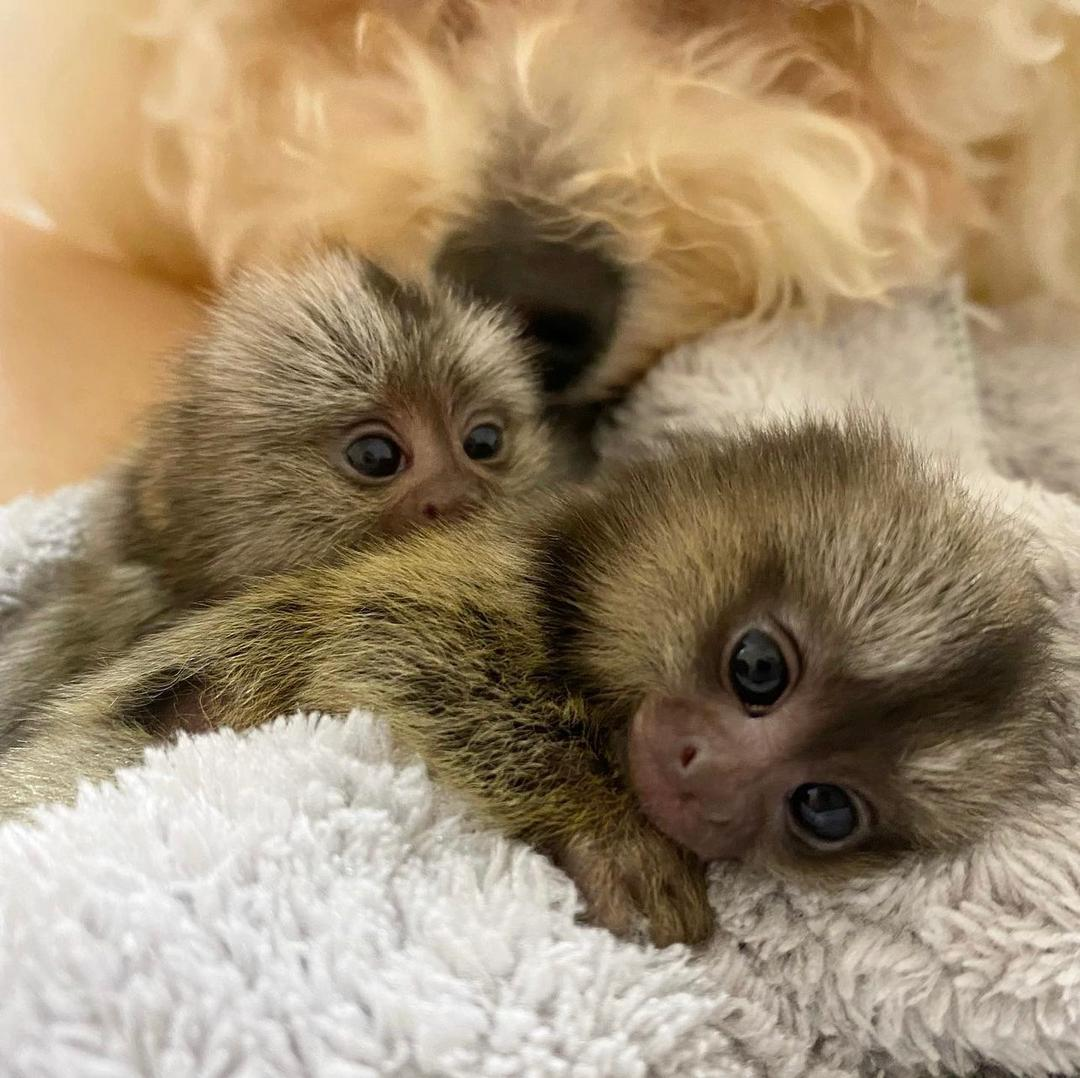
The formal names describe the noses. Catarrhines, the Old World group, have narrow nostrils set close together and facing downward. Platyrrhines, the New World group, have rounder nostrils set wide apart and opening sideways. It is the single most reliable diagnostic feature on a clear photograph.
Tails
Old World monkey tails are used for balance and are never prehensile; some species have almost no tail at all. Several New World lineages, including spider, howler and woolly monkeys, evolved a genuinely prehensile tail with a bare gripping pad. More on this in monkey adaptations.
Teeth
Old World monkeys have 32 teeth, the same dental formula as humans and apes. Most New World monkeys have 36, retaining an extra premolar on each side. Marmosets and tamarins deviate further, with specialised incisors for gouging bark.
Vision
Old World monkeys are reliably trichromatic. Many New World species are polymorphic, so colour vision varies between individuals, and the nocturnal owl monkey has given up colour vision almost entirely in exchange for light sensitivity.
Body Size and Lifestyle
Old World monkeys include all the true heavyweights and many part-time ground dwellers, from baboons to geladas. New World monkeys are smaller and almost exclusively arboreal, with none approaching mandrill size. Compare the extremes in largest monkeys on Earth and smallest monkey species.
Large multi-male troops with inherited female ranks are typical of Old World monkeys. New World monkeys show more monogamy, more cooperative infant care and, in spider monkeys, fission-fusion grouping. The details are in monkey behaviour and social life and monkey reproduction.
Cheek Pouches and Sitting Pads
Cheek pouches for carrying food and hardened sitting pads are Old World features with no New World equivalent. They are small details that reveal a great deal about how each group feeds and sleeps.
Why the Split Happened
The ancestors of New World monkeys reached South America from Africa around 40 million years ago, most likely on rafts of floating vegetation, and then diversified in isolation. That story is told in monkey evolution.
Practical Implications for Keepers
Because the two families differ in diet, climate tolerance and social needs, care regimes are not interchangeable. A marmoset needs gum, warmth and a family group; a macaque needs space, fibre and a large social structure. See the species feeding guide, our enclosure guide and the legal position.
Frequently Asked Questions
What is the main difference between Old World and New World monkeys?
Old World monkeys live in Africa and Asia and have narrow, downward-facing nostrils and non-prehensile tails. New World monkeys live in the Americas and have wide, side-facing nostrils, and some have prehensile tails.
How many teeth does each group have?
Old World monkeys have 32 teeth, the same as humans and apes. Most New World monkeys have 36, keeping an extra premolar on each side.
Which group is bigger?
Old World monkeys include all the true heavyweights, such as mandrills and baboons. New World species are smaller and almost entirely tree-dwelling.
Are marmosets Old World or New World?
New World. Marmosets and tamarins are South American, and their gum-feeding teeth and cooperative twin rearing are found nowhere in the Old World.
See also monkeys versus apes, African monkeys, Asian monkeys and South American monkeys.
Further reading
Explore More
Nose Shape and Other Old World vs New World Monkeys Clues
Nose shape is the classic giveaway for Old World vs New World monkeys: narrow, close-set nostrils versus wide, rounded ones. The biogeography of each region explains why these differences evolved separately.


Pingback: 50 Amazing Monkey Facts - Universal Primates
Pingback: Ultimate Guide to Monkeys: Species, Behaviour & Facts
Pingback: 8 Monkey Species Around the World by Region - Universal Primates
Pingback: 6 Monkey Adaptations Built for the Canopy - Universal Primates
Pingback: 6 Ways to Tell Monkeys vs Apes Apart Fast - Universal Primates