
Monkey Facts & Species, Primates Care And Tips
Where Do Monkeys Live? Global Ranges and Local Homes

Aug
Knowing where monkeys live around the globe explains a lot about their behavior, diet, and the conservation pressures they face.
Monkeys live on three continents in the wild, spread across a band that follows warm climates and forested or wooded land. Within that band they occupy an extraordinary spread of altitudes and habitats, from mangrove swamp at sea level to conifer forest at three thousand metres.
The Global Picture
Old World monkeys occupy sub-Saharan Africa, parts of North Africa, the Arabian Peninsula and a broad sweep of southern and eastern Asia. New World monkeys occupy southern Mexico, Central America and tropical South America as far south as northern Argentina. A single European population survives on Gibraltar, and no monkeys are native to Australia, Antarctica or most oceanic islands. The species-by-species breakdown is in monkey species around the world.
Africa
African monkeys use nearly every wooded environment on the continent. Guenons and colobus monkeys hold the rainforest belt of the Congo Basin and West Africa, vervets and patas monkeys work savanna and gallery forest, baboons range from semi-desert to montane grassland, and geladas graze the Ethiopian highlands above three thousand metres. Details in African monkeys.

Asia
Asian monkeys reach further from the equator than any others. Macaques occur from Pakistan to Japan and from lowland temple grounds to snow-covered hot springs, while langurs, surilis and proboscis monkeys hold specific forest types including mangrove and peat swamp. Snub-nosed monkeys endure freezing Himalayan and Chinese winters. See Asian monkeys.
The Americas
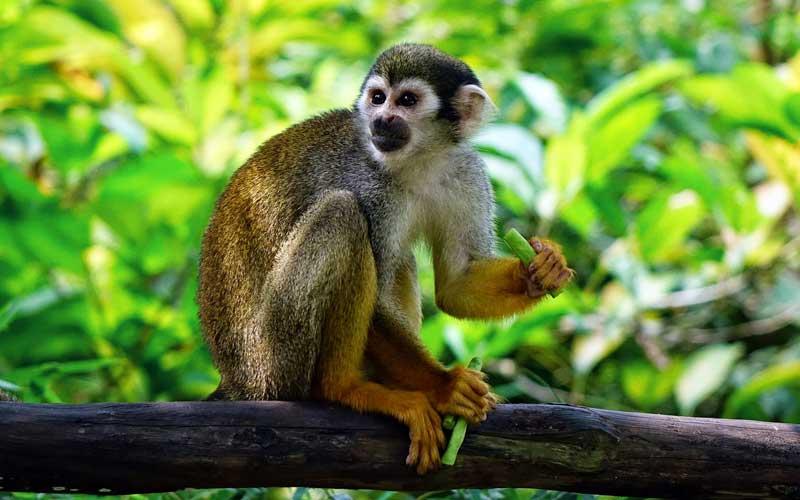
Every wild monkey in the Americas is a forest animal, and most rarely touch the ground. The Amazon basin is the global centre of diversity, with several species often sharing one stretch of forest by dividing the canopy into vertical layers and feeding at different heights. Coverage continues in South American monkeys and rainforest monkeys.
Why Monkeys Are Absent From Some Regions
Three factors explain the gaps. Cold winters without evergreen food supplies rule out most temperate zones. Deep ocean barriers prevented monkeys reaching Australia and remote islands. And in Europe, cooling climates during the ice ages eliminated the monkeys that once lived there, leaving only the Gibraltar population, which was almost certainly helped across by people.
Home Ranges: The Local Scale
Global maps hide the detail that matters most. A marmoset group may defend two hectares of gum trees for years, while a baboon troop can cover several square kilometres in a single day. Range size follows body size, diet quality and predation pressure, and it explains why so much captive housing fails: a monkey used to travelling a kilometre a day cannot be satisfied by a static cage. See our enclosure guide and exercise guidance.
Frequently Asked Questions
On which continents do monkeys live in the wild?
Africa, Asia and the Americas, plus a single introduced population in Europe on Gibraltar.
Do monkeys live in cold places?
Some do. Japanese macaques live in deep snow, geladas graze the Ethiopian highlands, and snub-nosed monkeys endure freezing Himalayan and Chinese winters.
How big is a monkey home range?
It varies enormously, from around two hectares for a marmoset family to several square kilometres a day for a baboon troop.
Are there monkeys in North America?
Wild monkeys reach as far north as southern Mexico. There are no native monkey populations in the United States or Canada.
Go deeper into habitat structure in monkey habitats explained, look at the vertical world in tree-dwelling monkeys, and start from the top with types of monkeys.
Explore More
How Climate Shapes Where Monkeys Live
Wherever monkeys live, local climate strongly shapes fur thickness, activity patterns, and diet, from snow-tolerant macaques to heat-adapted savanna baboons. Studying habitat requirements helps explain why certain species cannot simply be relocated.

Pingback: Types of Monkeys: A Complete Guide to Every Major Group - Universal Primates
Pingback: Urban Monkeys: City-Living Primates & Human-Monkey Conflict
Pingback: Can Monkeys Swim? Species That Take to Water - Universal Primates
Pingback: 7 Monkey Habitats From Swamps to Mountains - Universal Primates
Pingback: 7 Differences Between Old World vs New World Monkeys - Universal Primates