
Monkey Facts & Species, Primates Care And Tips
Smartest Monkey Species: Ranking the Great Problem Solvers
Aug
The smartest monkey species consistently surprise researchers with problem-solving skills once thought unique to apes and humans.
Ranking animal intelligence is harder than it sounds, because there is no single test that suits a leaf-eating langur and a tool-using capuchin equally well. Researchers instead look at a bundle of measures: tool use, social manipulation, memory, self-control and the ability to learn from others. Judged that way, a handful of monkey species stand out consistently.
1. Capuchin Monkeys
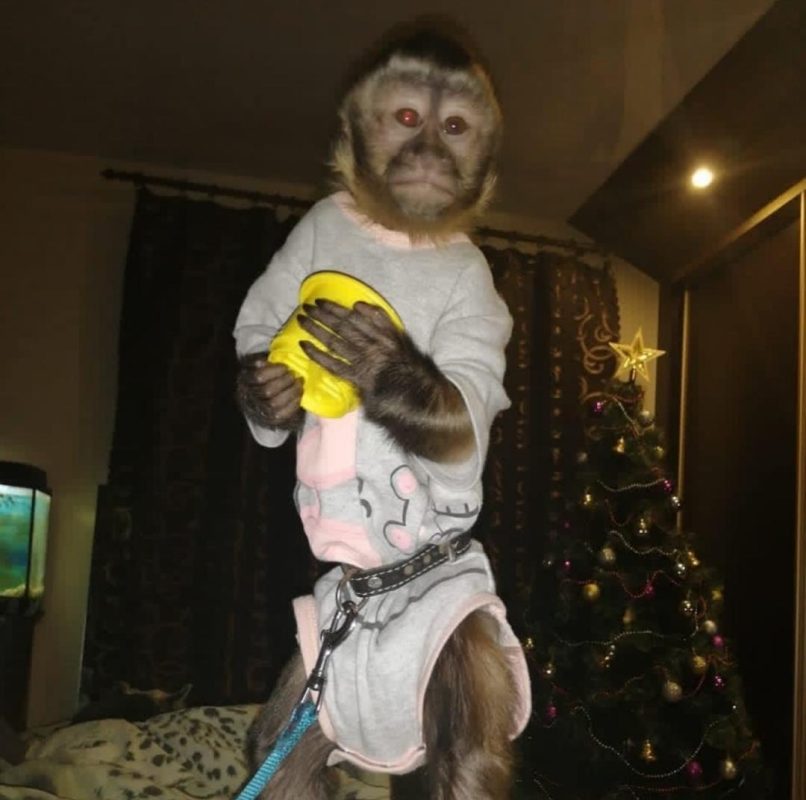
Capuchins are the tool users of the Americas. Wild groups in Brazil select stone hammers of the right weight, carry them to anvil sites and crack open palm nuts, adjusting their technique with age and experience. They also use sticks to probe crevices, rub plant material on their fur, and show a grasp of cause and effect that has made them a standard subject in cognition laboratories. Their brain-to-body ratio is among the highest of any monkey. If you want the practical side of living with such a demanding mind, see our capuchin care guide and the capuchin species pages.
2. Macaques
Macaques thrive in habitats humans have transformed, which is itself a form of intelligence. Long-tailed macaques in Thailand use stone tools to open shellfish, Japanese macaques wash food and pass local traditions between generations, and rhesus macaques have demonstrated numerical ordering and impulse control in controlled studies. Learn more in Asian monkeys.

3. Baboons
Baboons live in fission-fusion societies where knowing who ranks where, who owes whom and which alliances are shifting is a survival skill. Experiments have shown baboons can distinguish written words from nonsense strings and can reason about relationships in ways that resemble analogy. Their social intelligence is arguably the most sophisticated of any monkey.
4. Vervet Monkeys
Vervets gave science one of its landmark discoveries: alarm calls with specific referents. A leopard call sends the troop up trees, an eagle call sends them into cover, a snake call makes them stand and scan the ground. Infants learn to use the calls correctly over time, which points to genuine learning rather than reflex. This is covered further in how monkeys communicate.
5. Mandrills and Guenons
Large-brained African forest monkeys round out the list. Mandrills have been observed using tools for grooming and show evidence of deliberate self-medication, while several guenon species maintain mixed-species groups that require reading the signals of another species accurately. See African monkeys for the wider group.
How Intelligence Is Measured
Researchers rely on a mix of approaches: encephalisation quotient, which compares brain size to body size; behavioural flexibility in the wild; performance on transfer tasks that require applying an old solution to a new problem; and social learning, where an individual copies a technique from a group member. No single measure is decisive, and small-brained species often outperform expectations in their own specialist domain. Our companion article on monkey intelligence unpacks the science in detail.
What This Means for Anyone Caring for a Monkey
A clever animal is not an easier animal. Intelligent primates in captivity become destructive, anxious or aggressive when their minds are idle, which is why enrichment is a welfare requirement rather than a luxury. Read how to keep a monkey mentally stimulated, our list of enrichment ideas and exercise requirements.
Frequently Asked Questions
What is the smartest monkey?
Capuchins are usually placed first among monkeys for tool use and physical problem solving, while baboons arguably lead on social reasoning. The ranking depends on which type of intelligence is being measured.
Are monkeys smarter than dogs?
They excel at different things. Monkeys outperform dogs on physical problem solving and tool use; dogs are better at reading human gestures, which is the product of domestication rather than raw cognition.
Do monkeys use tools in the wild?
Yes. Wild capuchins crack nuts with stone hammers and anvils, and long-tailed macaques in Thailand open shellfish with stones, both maintained as local traditions across generations.
Does a clever monkey make a better pet?
The opposite. Intelligent primates become destructive and frustrated without constant problem solving, which is why enrichment is a welfare requirement rather than an optional extra.
Continue with monkeys versus apes, monkey behaviour and social life and the family overview in types of monkeys.
Further reading
Explore More
How Researchers Rank the Smartest Monkey Species
Scientists judge the smartest monkey species using tool use, memory tests, and social learning rather than a single IQ-style score. Broader animal cognition research keeps reshaping these rankings as new studies emerge.

Pingback: Asian Monkeys: Macaques, Langurs and Snow-Country Primates - Universal Primates
Pingback: Monkey Diet by Species: What Each Monkey Really Eats - Universal Primates
Pingback: Monkey Intelligence: What Research Really Shows - Universal Primates
Pingback: 6 Ways to Tell Monkeys vs Apes Apart Fast - Universal Primates
Pingback: Monkey Memory and Learning: 7 Amazing Ways Primates Adapt