
Monkey Facts & Species, Primates Care And Tips
Monkey Species Around the World: A Region-by-Region Guide

Aug
Monkey species around the world have adapted to an astonishing range of climates, from snowy mountains to steamy rainforests.
Monkeys occupy a band of the globe that stretches from the tip of southern Africa to the mountains of northern Japan, and from central Mexico to the cold forests of Argentina. More than 250 species share that range, and no two continents host the same cast of characters. This guide walks the world region by region so you can see how the family tree maps onto geography.
How Many Monkey Species Are There?
Estimates sit between 250 and 270 species, and the number keeps moving as genetic studies split old species into new ones. Roughly 140 belong to the Old World family and around 130 to the New World family, a division explained fully in Old World versus New World monkeys. For a taxonomy-first overview, start with our pillar guide to types of monkeys.
Africa
Africa is the heartland of Old World monkey diversity. Guenons dominate the forest canopy in a rainbow of face patterns, vervets and patas monkeys work the savanna edges, colobus monkeys strip leaves high in the trees, and baboons and mandrills bring sheer size and formidable social politics to the ground layer. Our regional deep dive into African monkeys covers the major genera and the habitats that support them.

Asia
Asia belongs to the macaques and the leaf monkeys. Macaques range from Afghanistan to Japan and thrive alongside people in temples, cities and farmland, while langurs, surilis, snub-nosed monkeys and proboscis monkeys occupy more specialised niches. The Japanese macaque survives snowbound winters that would kill a tropical species outright, a resilience explored in Asian monkeys and in our notes on monkey adaptations.
Central and South America
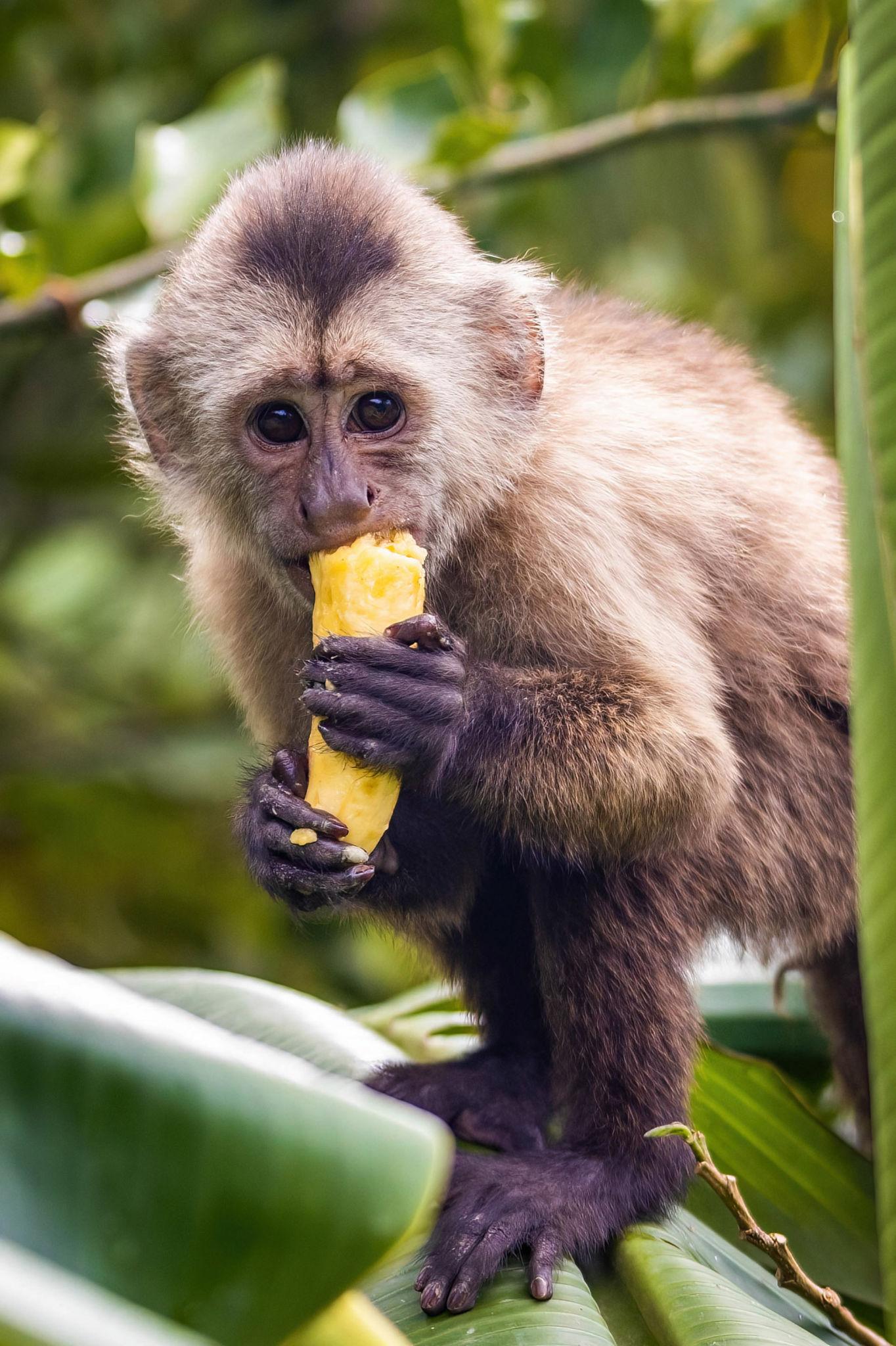
The Americas host the New World monkeys, every one of them a tree specialist. Capuchins and squirrel monkeys forage in mixed troops, spider and howler monkeys command the upper canopy, titis and sakis take the middle storeys, marmosets and tamarins exploit gum and insects in the understorey, and owl monkeys claim the night shift. See South American monkeys for the full regional picture and rainforest monkeys for how the canopy is divided up.
Europe and the Edges of the Range
Europe has a single wild monkey population, the Barbary macaque on the Rock of Gibraltar, descended from North African stock. At the other extreme, Japanese macaques on Honshu live further north than any other non-human primate. These outliers show how far a generalist body plan can travel when the food supply allows it.
Diversity Hotspots
Four countries account for a striking share of global primate diversity: Brazil, Indonesia, Madagascar and the Democratic Republic of the Congo. Madagascar is the odd one out, because its primates are lemurs rather than true monkeys. Brazil alone holds well over a hundred primate species, which is why Amazonian deforestation weighs so heavily in monkey conservation and in the outlook for endangered monkey species.
What Regional Differences Mean in Practice
Geography sets the rules for climate tolerance, diet and social structure. A species from equatorial lowland forest expects year-round humidity and fruit; a temperate macaque expects seasonal scarcity and cold nights. Anyone caring for a primate has to reproduce the right slice of that world rather than an average of all of them, which is the reasoning behind our species feeding guide and seasonal care advice.
Frequently Asked Questions
Which country has the most monkey species?
Brazil holds more primate species than any other country, with well over a hundred recorded, most of them monkeys of the Amazon and Atlantic forest.
Are there wild monkeys in Europe?
Only one population, the Barbary macaques of Gibraltar, which almost certainly arrived with human help from North Africa.
Why are there no monkeys in Australia?
Deep ocean barriers separated Australia from Asia long before monkeys evolved, so they never had a land route, and the continent has no native primates at all.
Which monkey lives furthest north?
The Japanese macaque of northern Honshu, which endures months of snow and sub-zero temperatures every winter.
Continue Exploring
From here you can follow the biology thread through monkey behaviour and social life and monkey lifespan, or the species thread through the largest monkeys on Earth and the smallest monkey species. If you are weighing up life with a primate, read is it legal to own a monkey first and browse the species profiles on our monkey listings page.
Further reading
Explore More
Comparing Monkey Species Around the World by Region
Looking at monkey species around the world region by region reveals clear patterns: diet, social structure, and body size often track closely with local climate and predator pressure. Biogeography explains much of why certain primates evolved where they did.

Pingback: 7 Facts About Where Monkeys Live Worldwide - Universal Primates