
Monkey Facts & Species, Primates Care And Tips
Monkey Reproduction: Mating Systems, Gestation and Rearing

Aug
Monkey reproduction covers a wide range of mating systems, from strict monogamy to competitive multi-male troops.
Reproduction in monkeys is slow by mammal standards. Few offspring, long gestation and years of dependence mean that every birth represents a major investment, and evolution has produced several very different strategies for protecting it.
Mating Systems
- Multi-male, multi-female – macaques, baboons and vervets, where both sexes mate with several partners and sperm competition and rank both matter.
- One-male groups – many langurs and geladas, where a single male monopolises breeding until displaced, sometimes triggering infanticide by the newcomer.
- Monogamy and cooperative breeding – marmosets, tamarins, titis and owl monkeys, where a bonded pair breeds and helpers raise the young.
- Fission-fusion promiscuity – spider monkeys, where dispersed females and roaming males create loose mating patterns.
Cycles and Signals
Old World monkeys usually have menstrual cycles of about 28 to 35 days, and several species advertise fertility through swelling and colour change in the sexual skin. New World monkeys tend to signal chemically instead, using scent marks that carry precise information about reproductive state, a channel discussed in how monkeys communicate.
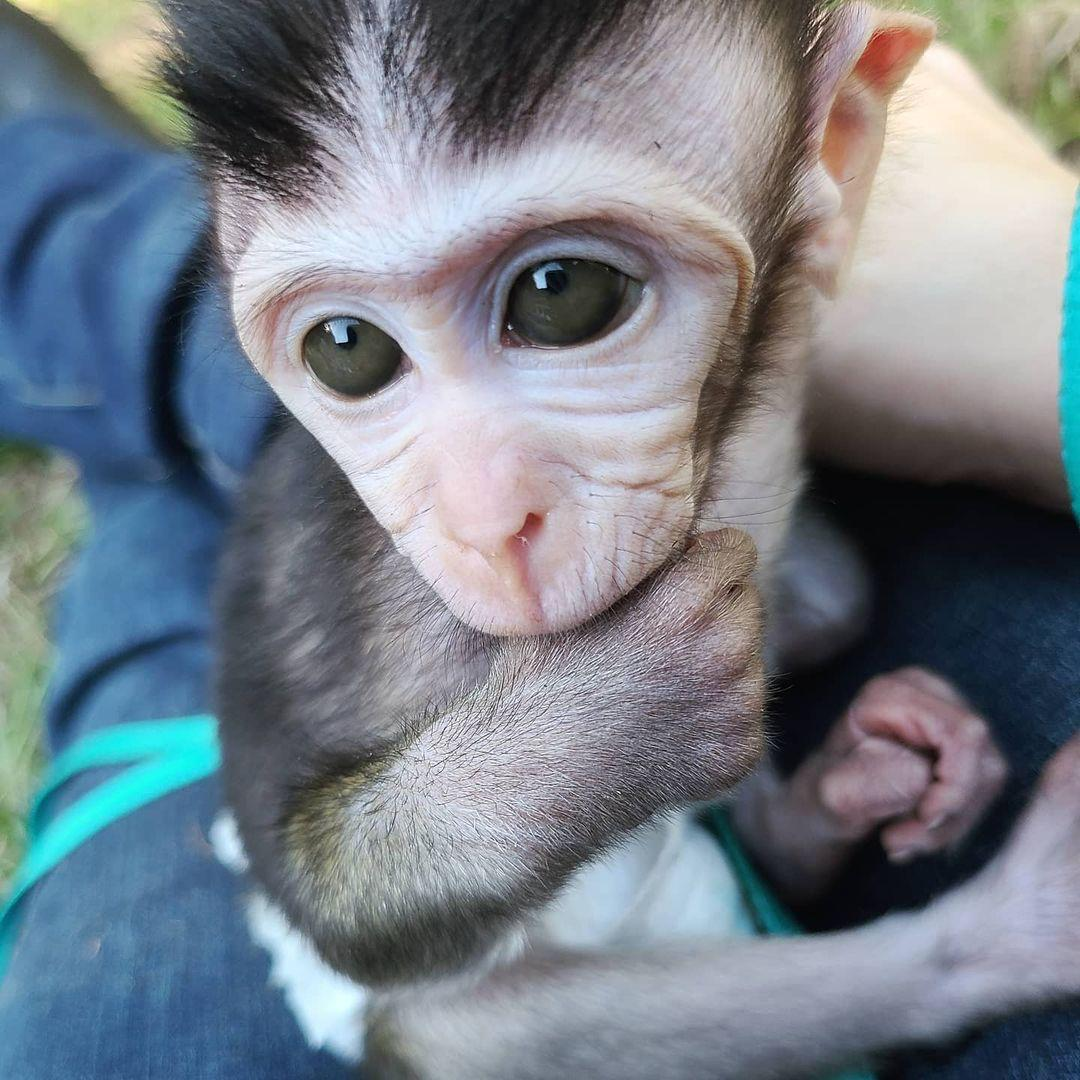
Gestation and Birth Intervals
Gestation runs roughly 130 to 150 days in marmosets and tamarins, about 160 to 170 days in squirrel monkeys and capuchins, and 165 to 190 days in most macaques and baboons. Birth intervals are equally telling: a marmoset pair may raise two litters a year, while a large Old World monkey typically produces one infant every one to three years. Slow reproduction is exactly why hunting and habitat loss hit these species so hard, as explained in endangered monkey species.
Cooperative Breeding in Detail
In a marmoset group, usually only the dominant female breeds. Her hormones and behaviour suppress ovulation in her daughters, who instead help carry and feed the twins. Fathers carry infants for much of the day, transferring them back for nursing. It is one of the most cooperative reproductive systems in the primate order and it collapses if the group is broken up, which is why isolated marmosets breed poorly.
Seasonality
Species in strongly seasonal habitats concentrate births into the period of best food availability. Rhesus macaques and squirrel monkeys both show tight birth seasons, whereas equatorial species with year-round fruit breed continuously. Our notes on seasonal care explain why captive animals still show these rhythms.
Breeding in Human Care
Responsible breeding requires genetic record keeping, veterinary oversight, appropriate social groups and honest planning for where every infant will live for the next twenty to forty years. Casual breeding produces animals that cannot be socialised and end up in sanctuaries. Read the legal position, our health guarantee and how to care for a baby monkey for the practical picture.
Frequently Asked Questions
How long is a monkey pregnancy?
Roughly 130 to 150 days in marmosets and tamarins, about 160 to 170 days in capuchins and squirrel monkeys, and 165 to 190 days in most macaques and baboons.
How often do monkeys give birth?
Small cooperative breeders can raise two litters a year, while large Old World monkeys usually produce one infant every one to three years.
Why do only some females breed in marmoset groups?
The dominant female suppresses ovulation in her daughters through hormonal and behavioural means, and they act as helpers instead, which is what makes raising twins possible.
Do monkeys breed seasonally?
Species in strongly seasonal habitats concentrate births into the best food period, while equatorial species with year-round fruit breed continuously.
Continue with baby monkeys, monkey lifespan and monkey behaviour and social life.
Further reading
Explore More
How Monkey Reproduction Shapes Troop Structure
Monkey reproduction strategies strongly influence troop size and stability, since competition for mates can trigger fights or shifting alliances. General mating system research explains why some species stay monogamous while others do not.

Pingback: Baby Monkeys: Birth, Development and the First Year - Universal Primates