
Monkey Facts & Species, Primates Care And Tips
Nocturnal Monkeys: The Owl Monkeys of the Night Shift
Aug
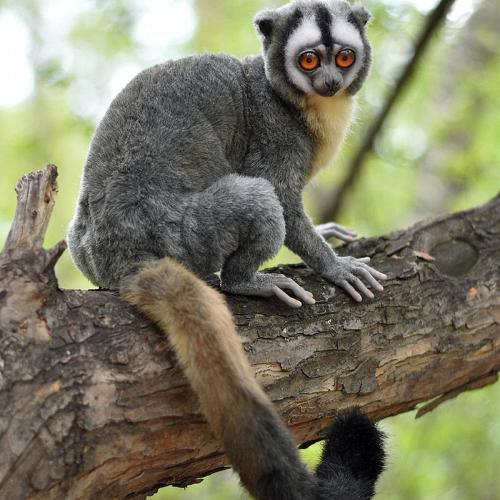
Almost every monkey is awake by day. One genus broke the pattern completely: the owl monkeys of Central and South America, also called night monkeys, which feed, travel and socialise in darkness. They are the only monkeys to have made that switch, and their bodies show it.
Built for Darkness
Owl monkeys have exceptionally large eyes packed with rod cells for low-light sensitivity. In exchange they gave up much of the colour vision other monkeys rely on to spot ripe fruit, and they lack the reflective eye layer that many nocturnal mammals possess. Their hearing and sense of smell carry more of the load than in diurnal species, a set of trade-offs described in monkey adaptations.
Why Go Nocturnal?
Two advantages stand out. First, the night shift is nearly empty of monkey competitors, so fruit and insects that would be stripped by day are available. Second, most primate-hunting eagles are inactive after dark, removing the single greatest threat to a small canopy monkey, as covered in monkey predators. The cost is exposure to nocturnal snakes and owls, and a permanent limit on how quickly they can travel.

Family Life
Owl monkeys are among the most consistently monogamous primates. A bonded pair holds a small territory with their offspring, and the father does most of the infant carrying, handing the baby back only to nurse. Groups are small, usually two to five animals, and disputes with neighbours are settled with calls and displays rather than fights. Compare this with the systems in monkey reproduction.
Diet
Fruit forms the core of the diet, supplemented with flowers, nectar, leaves and insects. Because they cannot rely on colour to judge ripeness, owl monkeys appear to use smell and texture instead, and they revisit reliable trees on a schedule. Dietary categories across the family are set out in what monkeys eat.
Moonlight Matters
Activity is strongly linked to moonlight. On bright nights owl monkeys travel and feed far more; on dark nights they stay quiet and close to cover. Populations in cooler, more seasonal parts of the range also become partly active at dusk and dawn, which shows how flexible the pattern really is.
Owl Monkeys in Human Care
Their nocturnal schedule makes them a poor match for household life: they are active precisely when people sleep, they need dim lighting and quiet, and they are stressed by daytime handling. Any facility keeping them must reverse light cycles carefully and house them as pairs. See our owl monkey profiles, our enclosure guide and the legal position before considering them.
Frequently Asked Questions
Which monkeys are nocturnal?
Only the owl monkeys, also called night monkeys, of Central and South America. Every other monkey is primarily active by day.
Why did owl monkeys become nocturnal?
The night shift has almost no monkey competitors and very few of the eagles that hunt small canopy primates by day.
Do owl monkeys see in colour?
Barely. They traded most colour vision for very large, light-sensitive eyes suited to darkness.
Do owl monkeys make good pets?
No. They are active while people sleep, need dim quiet conditions and pair-bonded company, and are stressed by daytime handling.
See also South American monkeys, rainforest monkeys and types of monkeys.
Further reading
Explore More

Pingback: Best Time to See Monkeys: Daily & Seasonal Timing Guide