
Monkey Facts & Species, Primates Care And Tips
Monkey Parenting and Family Life: Who Raises the Young
Aug
There is no single monkey family. In one species a mother raises an infant almost alone while unrelated females hover for a chance to hold it. In another, a father carries twins on his back all day and hands them over only to nurse. Family structure in monkeys tracks the mating system, the food supply and the risk of infanticide, and it explains much of what looks puzzling about monkey society.
The Default: Mothers Do Almost Everything
In most monkey species the mother is the entire support system. She carries the infant continuously for weeks or months, nurses on demand, and provides the transport, warmth and protection an infant cannot supply for itself. Weaning is gradual and often contested, with rejected infants throwing tantrums that look startlingly familiar. Because a single dependent infant is expensive, most monkeys produce one at a time and space births by one to three years, a pattern set out in monkey reproduction and baby monkeys.
Aunts, Sisters and Allomothering
Many species share the load. In vervets, langurs and several macaques, other females handle, carry and groom infants, a behaviour called allomothering. The benefits run both ways: mothers get time to feed, and young females gain practice before they have their own offspring. Handling is not always gentle, and in some species infant mortality rises when inexperienced females monopolise a newborn, which is why mothers of low rank are often reluctant to hand over.

Fathers That Do the Heavy Lifting
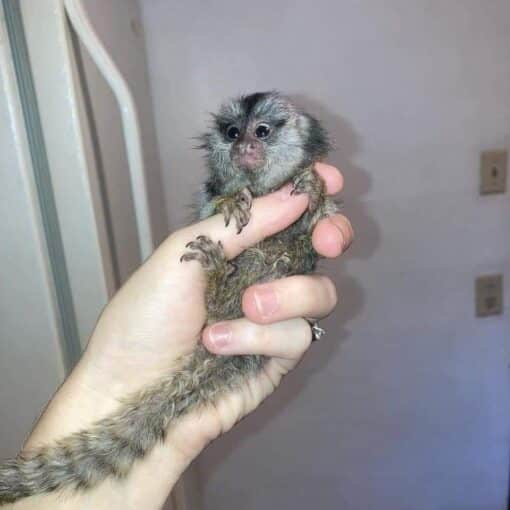
Marmosets and tamarins run the most cooperative system in the primate world. Females typically give birth to twins that together can weigh a fifth of the mother body weight, and the father and older siblings carry them, groom them and later share food. Owl monkeys and titi monkeys, both largely monogamous, also have fathers who carry infants for most of the day. In these species male care is not an extra, it is a requirement for the young to survive, and it shapes the whole family structure discussed in nocturnal monkeys and South American monkeys.
Matrilines: Rank You Inherit
In macaques and baboons, females stay in their birth group for life while males leave, so the social backbone is a set of related females: grandmothers, mothers, daughters and sisters. Rank in these matrilines is inherited, and a daughter typically acquires a position just below her mother, supported by relatives during disputes. That inheritance affects access to food, infant survival and even lifespan, which is why the same family can dominate a troop for decades. The wider political system is described in monkey behaviour and social life.
When Males Are a Danger
In species where a single male monopolises breeding, a takeover can be lethal for infants. Male Hanuman langurs that displace a resident male may kill unweaned young, which brings females back into breeding condition sooner. Females counter with a range of tactics, including confusing paternity by mating with several males, forming defensive coalitions, and temporarily leaving the group. Understanding this pressure explains a great deal about why females associate as closely as they do, and it connects to the strategies in monkey mating rituals and how monkeys protect themselves.
The Long Childhood
Monkeys grow up slowly compared with other mammals of similar size. A capuchin may not breed until seven, a baboon not until five or six, and juveniles spend those years playing, watching adults, and learning what is edible and who is dangerous. That extended apprenticeship is the point: monkey survival depends on learned skills and social knowledge rather than instinct alone, as covered in how monkeys learn new skills and monkey play behaviour.
Family Life in Captivity
Hand-rearing removes almost everything described above. A monkey raised without a mother, siblings or a troop misses the entire education that makes a functioning adult, and the results are well documented: poor social skills, abnormal repetitive behaviour, difficulty breeding, and aggression at maturity. This is the central welfare argument for keeping monkeys in appropriate social groups rather than alone with people, and it runs through the beginners guide to monkey care, baby monkey care and the legal position on ownership.
Frequently Asked Questions
Do monkey fathers help raise infants?
In most species, very little. In marmosets, tamarins, owl monkeys and titi monkeys, males do a large share of the carrying.
Do monkeys adopt orphans?
It happens, usually by a close relative such as an older sister or grandmother. Survival rates for orphans are still much lower than for infants with mothers.
How long do young monkeys stay with their mothers?
Nursing typically ends between six months and two years depending on species, but females often remain in the same group as their mother for life.
Do monkeys live in families or troops?
Both, depending on species. Marmosets live in small family units, while baboons and macaques live in large troops built from several related female lines.
Read next: monkey mating rituals and why monkeys groom each other.
Further reading
Explore More

Pingback: Tamarin Monkey Guide: Species, Size, Diet & Behaviour