
Monkey Facts & Species, Primates Care And Tips
The Strongest Monkey Species: Size, Bite and Real Power
Aug
Strength in monkeys is not one quality. There is absolute strength, which tracks body mass, and there is strength relative to size, where small species embarrass much larger animals. There is also weaponry, which in primates means canine teeth rather than claws. Measured across all three, the same handful of species keeps appearing at the top.
Mandrills: The Heavyweight
The mandrill is the largest monkey in the world, with big males reaching around 30 to 35 kilograms and occasionally more, built with a deep chest, heavy shoulders and thick forearms. Its canines can approach six centimetres, longer than those of a leopard of comparable weight, and they are used in display as much as in fighting. A mandrill yawn that shows the full dentition is a warning, not fatigue. The species leads our ranking in the largest monkeys on earth.
Baboons: Practical Power
Baboons are the strongest monkeys most people will ever encounter. Chacma and olive baboon males can exceed 30 kilograms, and they combine that mass with formidable canines, dense muscle and complete confidence on the ground. Baboons kill and eat hares, birds and young antelope, break into vehicles and buildings, and have been recorded driving off leopards. In terms of what a monkey can actually do to a person or a predator, adult male baboons set the standard.
Strength for Their Size
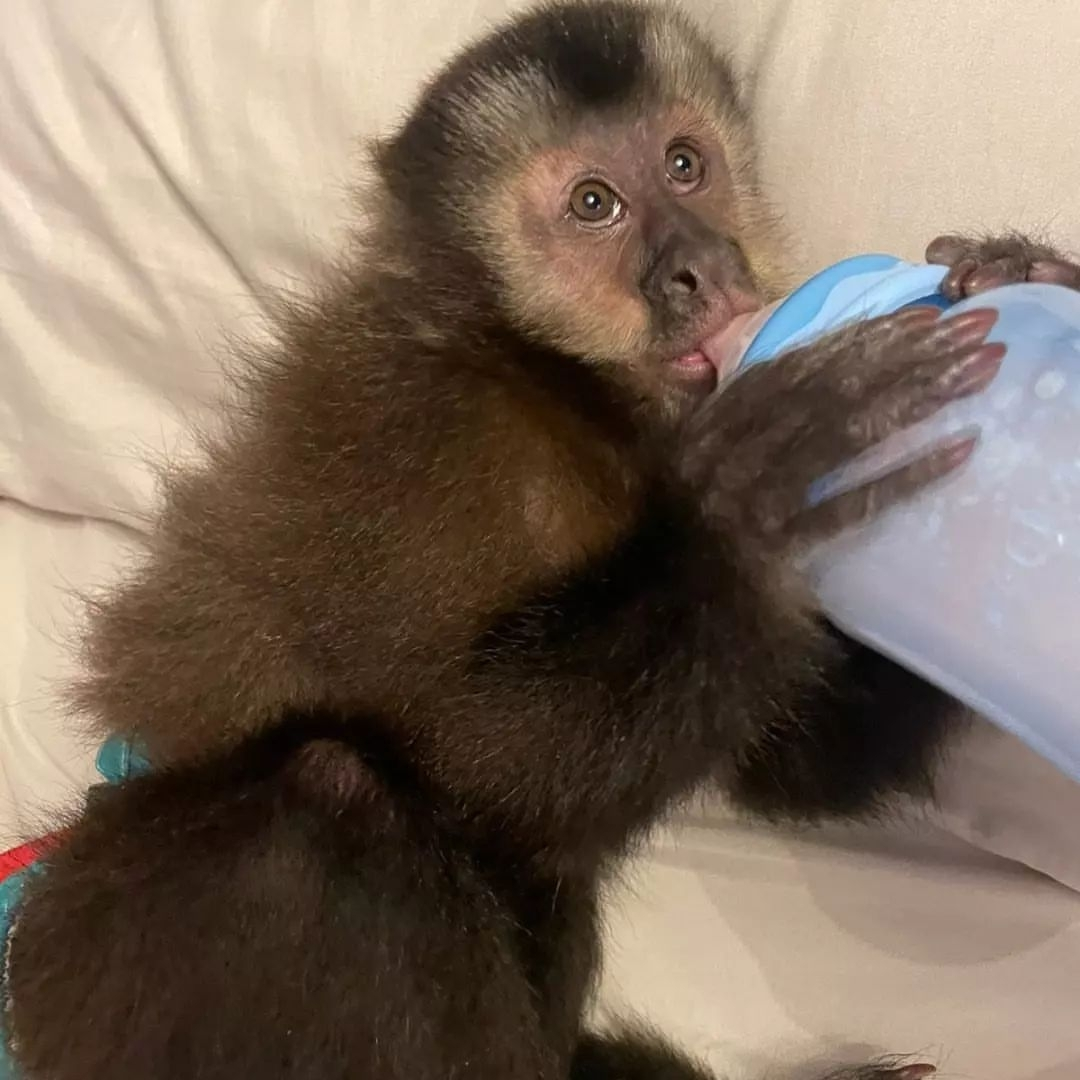
Weight is not the whole story. Capuchins weigh three to four kilograms yet routinely lift and swing stones that would be awkward for a small child, and they pull, twist and pry with a force that surprises everyone who works with them. Macaques of similar mass can overpower a much larger human hand. Part of the reason is muscle architecture and leverage suited to climbing, and part of it is that primates adapted to arboreal life carry unusually strong grip and pulling strength relative to body mass. This is one reason keeping small monkeys is far harder than it looks, as explained in the beginners guide to monkey care.
Bite Force and Canines
Among monkeys, the most dangerous equipment is dental. Male baboons, mandrills, drills and geladas all have enlarged canines maintained by sharpening against a lower premolar, and bite injuries from these species are severe. Even in small monkeys the canines are needle-sharp and the jaw is quick, which is why bites are the most common serious injury in private keeping and why medical attention is needed for any broken skin, a point covered in diseases that affect monkeys.
Where the Myth Goes Wrong
The claim that monkeys are five or ten times stronger than humans does not survive measurement. Careful studies on chimpanzees, which are apes rather than monkeys, found roughly one and a half times the force output of a human in pulling tasks, mostly explained by muscle fibre composition and mechanical arrangement. Monkeys are strong, unpredictable and fast, and that combination is dangerous enough without inflated numbers. Related misunderstandings are corrected in monkey myths and misconceptions and monkeys versus apes.
Why Males Are So Much Bigger
In mandrills, baboons and geladas, males can be twice the weight of females. That gap exists because males compete directly for breeding access, so size, canines and colour are all under intense selection. In species where pairs bond and males do not fight over mates, such as titi and owl monkeys, the sexes are nearly identical in size. The link between competition and body form is set out in monkey mating rituals and monkey adaptations.
Strength and Enclosure Design
Enclosure failures are almost always strength failures. Monkeys unscrew fittings, bend light mesh, lever gaps open and destroy furniture that would survive a dog for years. Hardware needs to be welded or bolted rather than clipped, mesh gauge needs to match the species, and anything a monkey can grip it will eventually test. See the enclosure guide and the capuchin care guide.
Frequently Asked Questions
What is the strongest monkey?
The mandrill on size and dentition, with large male baboons close behind and more likely to use that strength against people.
Are monkeys stronger than humans?
Pound for pound, generally yes, especially in grip and pulling. In absolute terms an adult human is stronger than most monkey species.
Which small monkey is strongest for its size?
Capuchins are the usual answer, capable of lifting and hammering with stones a large fraction of their own body weight.
Do monkeys have claws?
Most have flat nails like ours. Marmosets and tamarins have claw-like nails for clinging to bark, but no monkey has true fighting claws.
Read next: the largest monkeys on earth and the fastest monkey species.
Further reading
Explore More
- Homepage
- Shop
- Health Guarantee
- Shipping
- Contact Us
- Is It Legal to Own a Monkey?
- Baby Chimpanzees (Product Category)
- Capuchin Monkeys (Product Category)
- Related: Top Monkey Questions Answered
- Related: Weird and Wonderful Monkey Facts
- Related: Incredible Monkey Photos and Stories
- New Article: Diseases That Affect Monkeys
