
Monkey Facts & Species, Primates Care And Tips
Monkey Diet by Species: What Each Monkey Really Eats

Aug
Ask what a monkey eats and the only honest answer is that it depends entirely on which monkey you mean. A gelada spends its day plucking grass blades on an Ethiopian plateau. A pygmy marmoset drills holes in bark and waits for sap to well up. A spider monkey travels a kilometre to reach one ripe fig tree. All three are monkeys, and none of them could survive on the other two diets. This guide breaks monkey diets down by species and feeding group, so you can see what each kind of monkey actually eats and why its body is built for exactly that food.
If you want the broad overview first, start with our summary of what monkeys eat and the introduction to the types of monkeys that exist. This article goes deeper into the differences between them.
Why Diet Varies So Much Between Monkeys
Roughly 260 monkey species are spread across two long-separated branches of the primate tree, and diet is the single biggest reason they look and behave so differently. Three forces shape the menu. Body size comes first: a 120 gram marmoset needs concentrated, energy-dense food such as sap, insects and ripe fruit, while a 20 kilogram mandrill can afford to process bulky low-quality material. Habitat comes second, because a monkey can only eat what grows within reach, and the difference between evergreen rainforest and seasonal savanna woodland is enormous. Seasonality comes third, since almost no forest fruits year round. For the geography behind all of this, see monkey habitats explained and the split between Old World and New World monkeys.
Reading the Body: Guts, Teeth and Diet
You can predict a monkey diet from its anatomy with surprising accuracy. Leaf-eating colobines carry a large multi-chambered stomach where bacteria ferment cellulose, much like a cow, which lets them digest mature foliage that would pass straight through other monkeys. Cercopithecines such as macaques, baboons and guenons have a simple stomach plus cheek pouches, an adaptation for grabbing food fast and chewing it later in a safer spot. Marmosets have an enlarged caecum for fermenting tree gum, and short, chisel-like lower incisors for gouging bark. Molars tell the same story: sharp shearing crests cut leaves, low rounded cusps crush fruit, and thick enamel survives hard seeds and grit. More of these body-to-lifestyle links are covered in monkey adaptations.

Leaf Specialists: Colobus, Langurs and Proboscis Monkeys
Folivores build their diet around foliage, and they favour young leaves, which are softer, higher in protein and lower in toxins than mature ones. Black-and-white colobus monkeys can live on leaves for most of the year, supplemented with seeds, unripe fruit and flowers. Hanuman langurs mix leaves with fruit and flowers and cope well with human-modified landscapes. Proboscis monkeys of Borneo take young leaves and unripe seeds and largely avoid sugary ripe fruit, because sugar ferments too fast in a stomach designed for slow bacterial digestion and can make them dangerously bloated. Red colobus specialise so tightly on particular young leaves and shoots that habitat loss hits them harder than most, which is why several are listed among endangered monkey species.
Leaf diets come with a behavioural signature. Foliage is abundant but low in energy, so folivores rest a great deal, travel short distances and often live in small groups. You can see the pattern in the daily routines described in monkey behavior and social life. Most of these species are Asian or African, and they are profiled further in Asian monkeys and African monkeys.
Fruit Specialists: Spider, Woolly and Squirrel Monkeys
Frugivores chase ripe fruit and organise their whole lives around it. Spider monkeys are the classic example, with ripe fruit making up around three quarters of the annual diet, topped up with young leaves when fruit runs short. Because fruit trees ripen unpredictably and in patches, spider monkeys split into small subgroups that merge and separate through the day, a fission-fusion system that reduces competition at any single tree. Woolly monkeys follow a similar strategy on a heavier frame. Squirrel monkeys sit at the other end of the scale, dividing their time almost evenly between fruit and insects and spending hours working through foliage for grasshoppers, caterpillars and spiders.
Fruit-eaters are also the forest gardeners. Seeds swallowed at one tree are deposited kilometres away, which makes these species central to how rainforests regenerate. Their role is explored in rainforest monkeys, and the species themselves in South American monkeys.
Gum and Sap Feeders: Marmosets and Tamarins
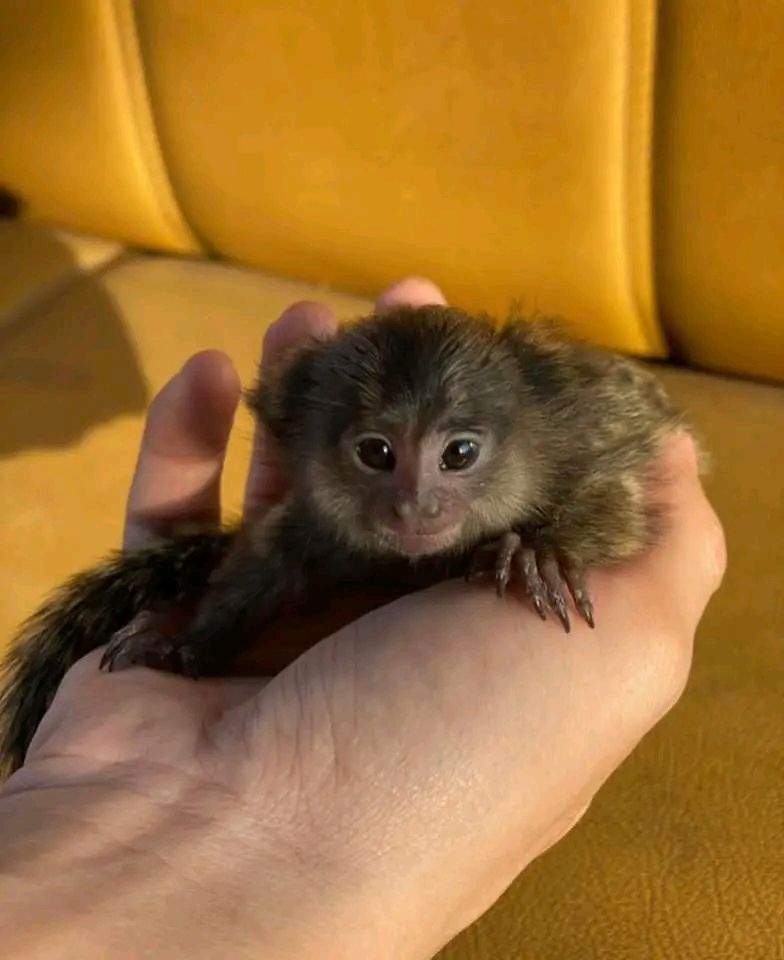
Gummivory is one of the most specialised monkey diets. Common marmosets and pygmy marmosets use short, robust lower incisors to gouge through bark, then return to the same wound day after day to lap up the exudate that seeps out. Gum is a carbohydrate-rich food available in the dry season when fruit disappears, and the marmoset caecum hosts bacteria that break it down. That reliable fallback is one reason the world smallest monkeys can hold tiny territories, a point covered in the smallest monkey species.
Tamarins have longer canines and cannot gouge bark, so they only exploit wounds and flows made by others. Their staple is a mix of ripe fruit, nectar, tree frogs, lizards and insects, and cotton-top and emperor tamarins will spend much of the morning hunting small prey in tangled vegetation before settling into fruit trees.
Extractive Foragers: Capuchins
Capuchins eat fruit, but what defines them is how they get the rest of their food. They are extractive foragers, meaning they specialise in food that is hidden or protected: they rip open bromeliads, tear bark for grubs, roll logs, crack open snails, and in the dry forests of Brazil they carry palm nuts to stone anvils and hammer them with rocks heavy enough to need two hands. Small vertebrates, eggs and nestlings are taken opportunistically. This is diet as problem-solving, and it is closely tied to why capuchins rank so highly in the smartest monkey species and in research on monkey intelligence.
Seed Predators: Sakis and Uakaris
While most monkeys wait for fruit to soften, sakis, bearded sakis and uakaris attack it early. Their splayed canines and robust jaws let them crack tough, woody husks and eat the immature seeds inside, a strategy known as sclerocarpic foraging. It gives them access to a food supply almost nothing else in the canopy can open, and it means they thrive in flooded and nutrient-poor Amazonian forests where soft-fruit specialists struggle.
Grass Grazers: The Gelada
The gelada of the Ethiopian highlands is the only primate that grazes for a living. Grass blades, and to a lesser extent rhizomes, seeds and herbs, make up the overwhelming majority of its diet, and it harvests them by sitting on the turf and plucking with a fast, precise thumb-and-finger grip while shuffling forward. The consequences are visible in its skull: broad molars with high crowns, deep-rooted chewing muscles and teeth worn flat by silica-rich grass. Grazing also allows the largest gatherings of any monkey, with hundreds of animals feeding together on open plateau, since grass is spread evenly and cannot be monopolised.
Generalist Omnivores: Macaques and Baboons
The most successful monkeys in terms of range and numbers are the ones with no dietary rules. Baboons eat grass blades and seeds, dig for corms and roots with their hands, take figs and acacia pods, raid birds nests, hunt hares and even young antelope, and switch to crops and refuse near human settlements. Long-tailed macaques wade in mangroves for crabs and shellfish. Japanese macaques survive winters that would kill most primates by stripping bark, buds and evergreen leaves when nothing else is left. Rhesus macaques live in temples and city streets on a diet largely provided, deliberately or not, by people.
Flexibility is also why these species dominate human-wildlife conflict statistics, and why the practical side of monkey conservation often comes down to managing food access rather than protecting forest alone.
A few species take diets that break every pattern. Owl monkeys feed in darkness on fruit, nectar, insects and leaves, timing activity to moonlight, as described in nocturnal monkeys. Yunnan snub-nosed monkeys live largely on lichen scraped from conifer branches in cold Chinese mountains. Mandrills, among the largest monkeys on earth, forage on the forest floor for fallen fruit, seeds, roots and animal prey. Patas monkeys on the savanna rely heavily on acacia gum and insects and can go long stretches with very little standing water.
Diet by Species: Quick Reference
| Species or group | Main diet | Notable point |
|---|---|---|
| Black-and-white colobus | Leaves, seeds, unripe fruit | Multi-chambered fermenting stomach |
| Proboscis monkey | Young leaves, unripe seeds | Avoids sugary ripe fruit |
| Hanuman langur | Leaves, fruit, flowers, crops | Thrives beside people |
| Spider monkey | Ripe fruit, young leaves | Key long-distance seed disperser |
| Squirrel monkey | Insects and fruit in near-equal share | Hours of daily insect hunting |
| Common marmoset | Tree gum, insects, fruit | Gouges bark with chisel incisors |
| Cotton-top tamarin | Fruit, nectar, insects, small vertebrates | Uses gum wounds made by others |
| Capuchin | Fruit, nuts, invertebrates, small prey | Cracks nuts with stone tools |
| White-faced saki | Hard unripe fruit and seeds | Opens husks other monkeys cannot |
| Howler monkey | Leaves plus fruit | Most leaf-dependent New World monkey |
| Gelada | Grass blades, rhizomes, herbs | Only grazing primate |
| Baboon | Grass, roots, fruit, insects, small mammals | Digs and hunts as well as gathers |
| Japanese macaque | Fruit, seeds, bark, buds, leaves | Survives deep snow on winter fallback foods |
| Owl monkey | Fruit, nectar, insects, leaves | Feeds at night |
| Yunnan snub-nosed monkey | Lichen, buds, leaves | Lichen-based mountain diet |
Any species list is a snapshot. Most monkeys switch foods several times a year, and what matters for survival is the fallback food during the lean season rather than the preferred food during abundance. Figs sustain whole communities of frugivores because different fig species fruit at odd intervals through the year. Gum carries marmosets through the dry months. Bark and buds carry Japanese macaques through winter. Young leaves carry spider monkeys through fruit gaps. Ranging behaviour follows the same rhythm, with troops travelling further and using different levels of the forest as food shifts, a pattern described in arboreal monkeys and where monkeys live.
What Wild Diets Mean for Monkeys in Human Care
Wild feeding data is the benchmark for captive nutrition, and the most common mistake is feeding sugar-rich cultivated fruit to species that evolved on fibre, gum, insects or foliage. Cultivated bananas and grapes are far sweeter than anything in a wild forest, and diets built around them are linked to obesity and diabetes in monkeys. Colobines need bulk fibre and browse. Marmosets need a gum source and supplementary vitamin D3. Capuchins need food they have to work for, which is where puzzle feeders and scatter feeding matter as much as the ingredients. For practical guidance see our feeding guide for different monkey species, the list of safe fruits and vegetables, the warnings in foods you should never feed a monkey, and ideas in monkey enrichment.
Frequently Asked Questions
Do all monkeys eat bananas?
No. Cultivated bananas do not grow wild in most monkey habitats, and many species would rarely encounter one. Wild bananas are small, seedy and far less sweet than supermarket varieties.
Which monkeys eat meat?
Baboons, capuchins, some macaques and several guenons take animal prey opportunistically, including insects, eggs, lizards, nestlings and occasionally small mammals. No monkey is a full carnivore.
Which monkey has the strangest diet?
The gelada, which grazes grass like an antelope, and the Yunnan snub-nosed monkey, which lives largely on lichen, are the two clearest outliers.
Why do some monkeys have pouched cheeks?
Cheek pouches let macaques, baboons and guenons stuff food quickly and chew it later somewhere safer, which is a real advantage when competitors or predators are nearby.
Do monkeys drink water?
Yes, but many meet most of their needs from moisture in fruit, leaves and dew, and some savanna species drink only every few days.
Diet is the thread that connects almost everything else about these animals, from body size and tooth shape to group size and range. To follow that thread further, compare the groups in types of monkeys and read how feeding pressures shaped the lineage in monkey evolution.
Further reading
Explore More

Pingback: 25 Funny Monkey Behaviors Explained - Universal Primates
Pingback: Ultimate Guide to Monkeys: Species, Behaviour & Facts